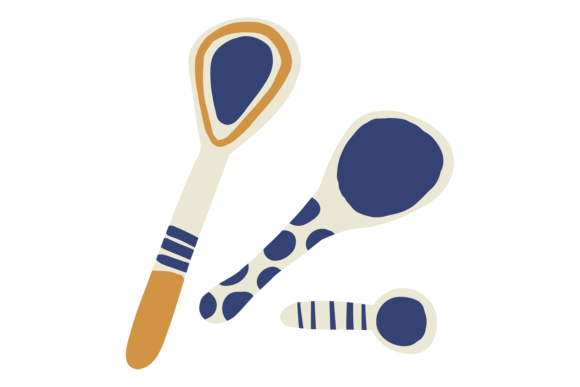
Cooking Spoons. Hand Drawn Utensils in D
In the world of visual design, few elements bridge the gap between functionality and aesthetic warmth as effectively as hand-drawn illustrations. When you encounter a resource like Cooking Spoons. Hand Drawn Utensils in D, you are not just looking at a collection of clip art; you are accessing a curated set of visual assets that evoke nostalgia, craftsmanship, and the intimate joy of home cooking. This specific vector pack, often available in high-quality formats like EPS and JPG, offers designers, bloggers, and small business owners a versatile toolkit to elevate their projects with an organic, Scandinavian-inspired touch.
The appeal of these utensils lies in their simplicity and stylistic clarity. Rendered in a decorative Scandinavian style, the illustrations strip away unnecessary detail to focus on form and function. The "in D" designation typically refers to a specific color palette or shading technique—often involving soft gradients, subtle shadows, or a distinct monochromatic depth—that gives the flat vector shapes a sense of volume without losing their clean, modern line work. For creators working in digital spaces, this balance is crucial: it provides enough visual interest to hold attention while remaining unobtrusive enough to serve as background elements, icons, or accent graphics.
The Power of Scandinavian Minimalism in Digital Design
Scandinavian design principles have dominated interior design and graphic arts for decades because they prioritize human-centric aesthetics. They are functional, accessible, and inherently calming. When applied to culinary themes, such as hand-drawn cooking spoons, ladles, whisks, and spatulas, this style communicates trust and authenticity. In an era where consumers are increasingly skeptical of overly polished, AI-generated, or mass-produced imagery, hand-drawn assets signal effort and care.
For freelancers and entrepreneurs, particularly those in the food and beverage industry, using Cooking Spoons. Hand Drawn Utensils in D can significantly enhance brand perception. A restaurant menu designed with these vectors feels more artisanal than one relying on stock photography. A blog post about sourdough baking illustrated with these utensils invites the reader into a cozy, tactile experience. The isolated white background common in these EPS and JPG files ensures that the illustrations can be dropped into any layout without complex masking, allowing for seamless integration across diverse platforms.
Versatile Applications Across Creative Projects
One of the greatest strengths of this asset pack is its adaptability. Because the utensils are isolated and presented in scalable vector formats (EPS), they can be resized from tiny favicons to large wall murals without losing resolution. Here is how different creative professionals can leverage these resources:
- Branding and Logo Design: Small business owners launching a bakery, spice shop, or cooking school can use individual spoon or whisk icons as central motifs in their logos. The hand-drawn quality adds a personal signature to the brand identity.
- Editorial and Blog Content: Writers and bloggers can break up text-heavy articles with these illustrations. Instead of generic food photos, a recipe article might feature a stylized drawing of a wooden spoon stirring a pot, reinforcing the narrative of homemade comfort.
- Packaging Design: For product packaging, whether for kitchenware, cookbooks, or gourmet ingredients, these utensils provide a charming, retro-modern aesthetic. The Scandinavian style pairs exceptionally well with minimalist typography and earth-tone color palettes.
- Social Media Graphics: Marketers can create engaging Instagram stories or Pinterest pins by combining these utensil illustrations with quotes about cooking, seasonal recipes, or behind-the-scenes content. The clean lines ensure readability even at smaller mobile screen sizes.
Stylistic Variations and Customization
While the base assets offer a cohesive look, their true value emerges when customized. The "D" in the title often implies a specific depth or dimensional quality, but designers are encouraged to experiment with color overlays and layering. Since the files are typically provided in editable vector formats, you can alter the stroke weight, change the fill colors to match your brand guidelines, or combine multiple utensils to create complex scenes.
Consider the concept of "visual rhythm." By arranging a ladle, a slotted spoon, and a whisk in a diagonal composition, you can guide the viewer’s eye across a webpage or print piece. You might also play with scale—placing a large, detailed spoon in the foreground with smaller, fainter utensils in the background to create depth. This approach transforms static clip art into dynamic compositional elements.
Furthermore, the hand-drawn nature of these utensils allows for thematic variations. If you are designing for a rustic farmhouse audience, you might pair these images with textured paper backgrounds and serif fonts. For a more contemporary tech-savvy cooking app, keeping the white background and pairing the utensils with sans-serif typography and bright accent colors will maintain a clean, user-friendly interface. The key is consistency: once you choose a direction, ensure all graphical elements support that mood.
Practical Tips for Implementation
To get the most out of Cooking Spoons. Hand Drawn Utensils in D, consider the technical aspects of file management and usage. Always keep the original EPS files archived; these are your master copies. Use them to generate JPGs or PNGs at various resolutions depending on the medium. For web use, optimizing these images for fast loading times is essential, especially if you are creating custom SVG versions by tracing or simplifying the vectors.
When integrating these assets into larger designs, pay attention to negative space. Hand-drawn illustrations thrive when they have room to breathe. Avoid cluttering the utensils with excessive text or competing graphical elements. Let the clean lines of the Scandinavian style speak for themselves. Additionally, be mindful of cultural context; while these utensils are universal symbols of cooking, ensuring they align with the specific culinary traditions you are representing will add an extra layer of authenticity to your work.
Ultimately, the goal is to use these tools not just as decoration, but as communicators. A hand-drawn spoon is more than a tool; it represents the act of creation, the sharing of meals, and the warmth of hospitality. By incorporating Cooking Spoons. Hand Drawn Utensils in D into your projects, you tap into these universal emotions, creating designs that resonate deeply with audiences who value craft, clarity, and connection.
Whether you are a seasoned graphic designer building a portfolio or a hobbyist blogger looking to add a personal touch to your weekend recipes, these assets offer a reliable, stylish foundation. They remind us that good design, like good cooking, often comes down to simple ingredients prepared with care. Embrace the versatility of these hand-drawn utensils, and let them bring a touch of Nordic charm and practical elegance to your next creative endeavor.