Green Realistic Spring Grass: Elevating Your Eco-Friendly Design Projects
In the realm of digital design and environmental illustration, few elements carry as much immediate emotional weight and visual appeal as fresh spring vegetation. Green Realistic Spring Grass represents more than just a collection of images; it is a fundamental tool for designers, architects, and artists who strive to bring the vitality of nature into their work without compromising on authenticity. Whether you are crafting a brochure for an environmental non-profit, designing a landscape plan for a new community garden, or creating decorative elements for a seasonal marketing campaign, the quality of your botanical assets can make or break the overall impact of your project.
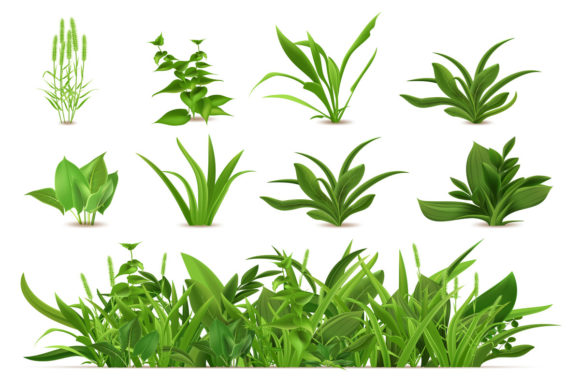
This specific illustration set offers a comprehensive solution for those seeking high-quality, eco-friendly resources. By providing a variety of grass, foliage, and bushes, it addresses the common challenge of finding cohesive natural elements that look professional yet organic. The product includes one versatile EPS10 file alongside a 72ppi resolution JPEG preview, ensuring that users have both scalable vector graphics for crisp printing and accessible raster images for quick digital mockups. This dual-format approach caters to a wide range of workflows, from detailed architectural rendering to rapid social media content creation.
Understanding the Need for Authentic Natural Elements
Design professionals often face a significant hurdle when trying to convey the concept of sustainability or seasonal renewal. Generic clip art often looks flat, artificial, or disconnected from the real world. When a user sees a graphic intended to represent "greenery," they should immediately feel the freshness of spring. However, achieving this requires assets that possess texture, depth, and realistic lighting. Without these qualities, designs risk appearing dated or untrustworthy, which can undermine the message of an eco-friendly initiative.
The primary goal for many adults in creative fields is to create visuals that resonate with audiences on an emotional level while maintaining technical precision. A landscape architect needs to show how a new park will look after the snow melts, while a graphic designer might need to frame a text box with lush foliage that doesn't obscure the message. The challenge lies in sourcing elements that are diverse enough to cover different types of terrain but consistent enough to maintain a unified style. This is where a curated set like Green Realistic Spring Grass becomes indispensable.
How Green Realistic Spring Grass Solves Common Design Challenges
The core value of this illustration set lies in its ability to bridge the gap between artistic vision and practical execution. By incorporating Green Realistic Spring Grass, users gain access to a library of textures that mimic the subtle variations found in nature. Unlike simple solid-color shapes, these illustrations capture the intricate details of individual blades, the density of bushes, and the layered complexity of foliage.
Scalability and Precision: One of the most critical features of this product is the inclusion of the EPS10 file. Vector formats allow designers to scale their artwork from a small icon on a mobile screen to a massive billboard without losing any clarity. This is particularly important for print projects where sharpness is paramount. If you are designing a poster for a local recycling event, you can zoom in on the grass texture to ensure every detail is crisp, regardless of the final print size.
Cohesive Aesthetics: Mixing and matching stock images from different sources often results in a disjointed look due to varying color palettes and styles. This set provides a unified ecosystem of plants. The grass, foliage, and bushes share a consistent lighting model and color temperature, allowing them to blend seamlessly. This ensures that the final composition feels like a single, coherent environment rather than a collage of disparate parts.
Practical Applications Across Industries
The versatility of Green Realistic Spring Grass makes it suitable for a diverse array of industries and use cases. Here is how different professionals can leverage these assets to achieve their goals:
- Landscape Architects and Urban Planners: These professionals can use the detailed foliage and bushes to populate site plans and renderings. Instead of using generic green blocks to represent plant life, they can layer realistic grass textures to give clients a true sense of the future space. This helps stakeholders visualize the softening effect of nature on hard urban structures.
- Eco-Brands and Marketing Agencies: Companies focusing on sustainability need imagery that reinforces their values. Using authentic spring grass in packaging design, website headers, or annual reports signals a genuine commitment to the environment. It adds a touch of warmth and life to corporate communications that sterile photography sometimes lacks.
- Event Planners and Decorators: For spring weddings, corporate retreats, or community festivals, decorators often need to create immersive environments. Digital mockups using this illustration set can help planners present ideas to clients before purchasing physical materials. They can visualize how different arrangements of bushes and grass will look under various lighting conditions.
- Educational Content Creators: Teachers and textbook authors require accurate depictions of flora to teach biology or geography. The realistic nature of these illustrations ensures that students learn about the correct appearance of native spring vegetation, enhancing the educational value of the material.
Implementation Strategies for Maximum Impact
To get the most out of this product, users should consider how they integrate these elements into their broader workflow. Simply pasting a grass image onto a background is rarely sufficient. The key is to treat the illustration set as a building block for larger compositions.
Layering for Depth: In Photoshop or Illustrator, use the provided foliage and bushes to create foreground, mid-ground, and background layers. By adjusting the opacity and blending modes of the grass elements, you can simulate atmospheric perspective, making distant bushes appear softer and lighter than the vibrant grass in the immediate foreground. This technique adds a three-dimensional quality to flat designs.
Color Harmony: While the set comes with a natural green palette, do not be afraid to adjust the hue or saturation slightly to match your brand colors. However, keep the adjustments subtle to maintain the "realistic" aspect. Drastic changes can turn the spring grass into something abstract, defeating the purpose of the asset.
Contextual Placement: Consider the narrative of your design. Is the grass meant to be wild and untamed, suggesting a natural reserve? Or is it manicured and orderly, representing a well-maintained park? Use the different varieties within the set—some grass may be tufted and clumpy, while others are long and flowing—to tell this story visually.
Considerations for Diverse User Approaches
Different users will approach the implementation of Green Realistic Spring Grass based on their specific technical constraints and creative goals. Graphic designers working primarily in vector software will find the EPS10 file invaluable for creating logos and icons that need to remain sharp at any size. On the other hand, web developers or social media managers might prefer the 72ppi JPEG preview for quick prototyping and testing layouts on various devices.
For beginners, the ease of use is a major benefit. The files are ready to drop into a project without complex tracing or editing. Advanced users, however, will appreciate the potential for modification. They can isolate specific leaves or blades of grass to create custom patterns, repeating textures for backgrounds, or unique borders for invitations. The diversity within the set ensures that even experienced designers will find fresh combinations that keep their work looking innovative.
Conclusion: A Vital Resource for Modern Design
In an era where visual communication is paramount, the choice of imagery speaks volumes about the quality and intent of a project. Green Realistic Spring Grass offers a reliable, high-fidelity solution for anyone looking to infuse their work with the energy of the natural world. By combining the scalability of vector graphics with the visual richness of realistic textures, this illustration set empowers users to create designs that are not only aesthetically pleasing but also environmentally resonant.
Whether you are planning a large-scale environmental campaign or simply adding a touch of spring to a personal blog, the outcomes are clear: increased engagement, better visualization, and a stronger connection with your audience. Embracing these tools allows you to focus less on sourcing assets and more on the creative vision itself. With the right foundation of realistic grass and foliage, your eco-friendly and decorative projects are poised to thrive.